Ready-to-drink coffee — usually shortened to RTD — is exactly what the name says: coffee that’s already brewed, packaged, and meant to be opened and drunk with no preparation. It’s the fastest-growing segment of the cold coffee market, and cold brew makes up a large share of it, but the category covers more than that.
What Counts as RTD Coffee
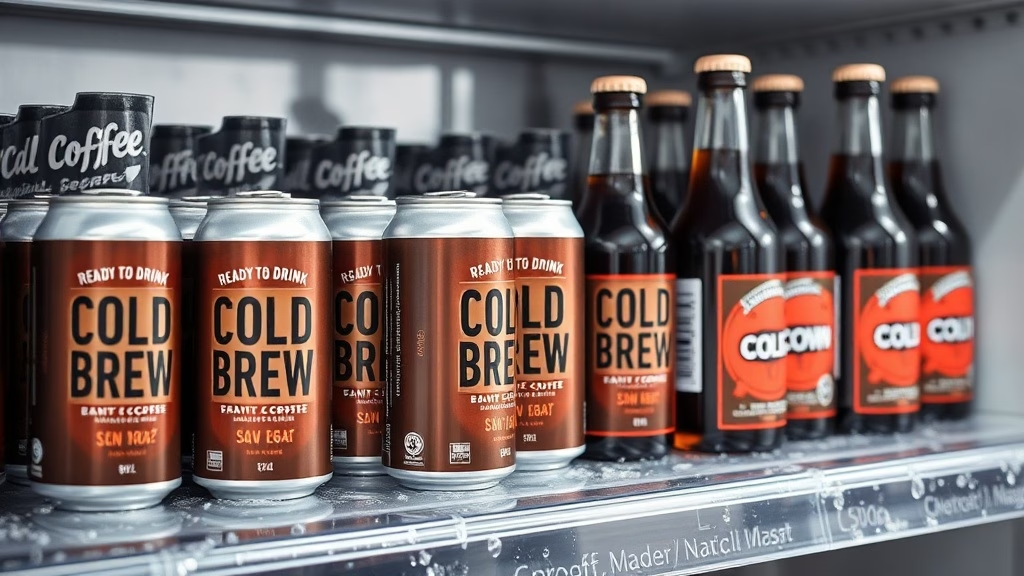
RTD coffee is any pre-brewed coffee sold in a sealed single-serve or multi-serve container, ready to consume at the strength it’s packaged. The main formats you’ll see:
- Canned cold brew — brewed cold, packaged at drinking strength, usually black or lightly sweetened.
- Bottled cold brew — the same idea in glass or plastic. Packaging genuinely affects how well the coffee holds up; see our canned vs bottled comparison.
- Nitro cold brew in cans — infused with nitrogen and fitted with a widget that recreates the cascading pour when opened.
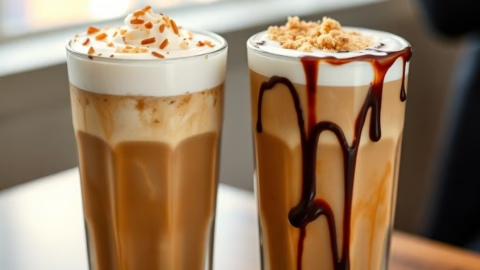
- RTD lattes and milk-based coffees — pre-mixed with dairy or plant milk, typically sweetened.
- Canned iced coffee — brewed hot then chilled, which is a different product from cold brew despite similar packaging.
RTD vs Concentrate: The Key Distinction
This is the difference that trips most people up at the shelf. RTD is at drinking strength — open and drink. Concentrate is not — it must be diluted, typically 1:1 or 1:2 with water or milk.
Drinking undiluted concentrate isn’t dangerous, but it’s unpleasantly strong and delivers a much larger caffeine dose than intended. Conversely, diluting an RTD leaves you with weak, watery coffee. Check the label: concentrate bottles say so prominently and give a dilution ratio.
Concentrate is generally better value per serving since you’re not paying to ship water, and it gives you control over strength. RTD wins purely on convenience. If you’d rather make your own concentrate, our concentrate guide covers the ratios.
How RTD Coffee Is Made and Kept Shelf-Stable
Brewed coffee spoils and oxidizes quickly, so RTD producers use one of a few approaches to make it last:
- Pasteurization — heat treatment that kills microbes, allowing shelf-stable storage. It can slightly alter flavor compared to fresh, which is a trade-off some specialty brands avoid.
- HPP (high pressure processing) — uses intense pressure instead of heat to inactivate microbes, preserving more of the fresh-brewed flavor. HPP products usually require refrigeration and carry shorter dates.
- Nitrogen flushing — displacing oxygen in the headspace before sealing, which slows oxidation regardless of the preservation method used.
- Refrigerated distribution — some fresh RTD skips heavy processing entirely and relies on cold chain plus a short shelf life.
This is why you’ll find some RTD coffee in the shelf-stable aisle and some in the refrigerated case — they’re preserved differently, and the refrigerated ones generally taste closer to freshly brewed.
Caffeine in RTD Coffee
It varies far more than people expect — anywhere from roughly 100mg to over 300mg per can depending on brand, size, and whether it’s a standard cold brew or a high-caffeine formulation. Cold brew RTDs in particular can be strong, because cold brew is often brewed at a high coffee-to-water ratio to begin with. Always check the label if you’re caffeine-sensitive; see our cold brew caffeine breakdown for how the numbers compare across brewing methods.
Is RTD Coffee Worth It?
Where it makes sense: commuting, travel, the office, or any situation where brewing isn’t practical. Consistency is also a genuine benefit — every can tastes the same, with none of the variability of home brewing.
Where it doesn’t: daily home consumption. RTD runs several times the per-serving cost of brewing your own, and the flavor ceiling is lower than fresh cold brew made from good beans. If you drink cold coffee every day at home, a batch of homemade concentrate is dramatically cheaper — see our bean selection guide to get started.
Many people reasonably do both: homemade concentrate in the fridge for daily use, RTD cans for travel and convenience.
What to Look For on the Label
- Coffee as the first ingredient, and ideally a stated origin or roast profile.
- Added sugar content — RTD lattes and flavored versions can carry a surprising amount. Black cold brew RTDs are usually zero.
- "Concentrate" on the label — the single most important check, so you don’t accidentally drink it undiluted.
- Production or best-by date — fresher is genuinely better with RTD coffee, and dates vary widely between shelf-stable and refrigerated products.
See our tested ready-to-drink cold brew picks for specific products across these categories.