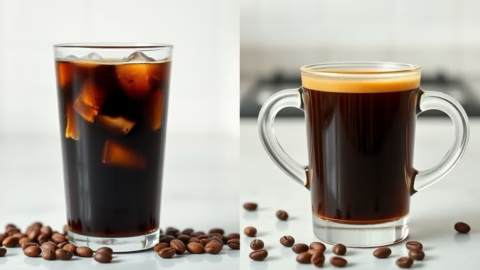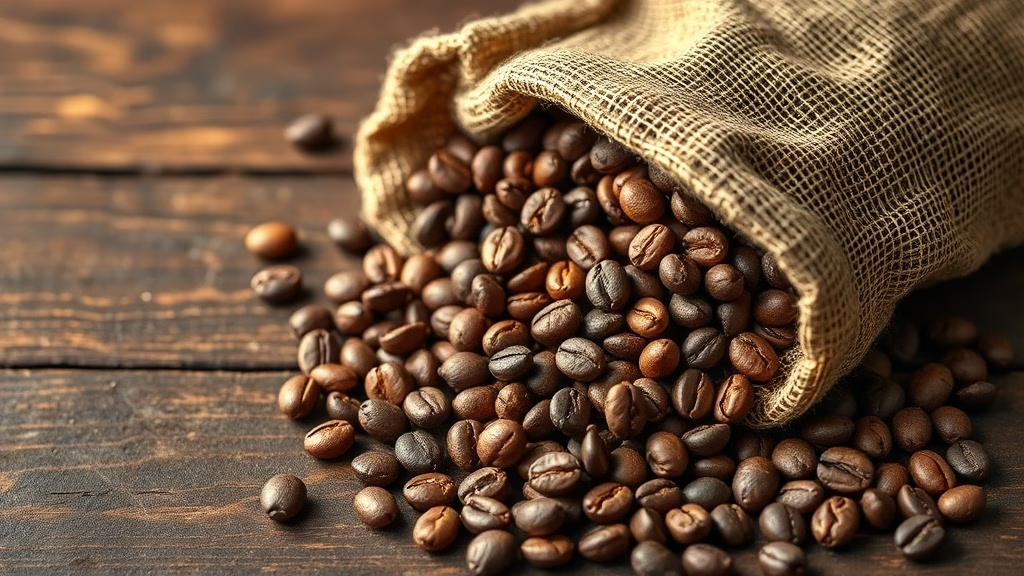
Cold brew is more forgiving than most brewing methods — the long steep compensates for a lot of variables that matter enormously in espresso or pour-over. But the coffee you start with still determines the ceiling of what your cold brew can taste like. Here is how to choose beans that produce clean, flavorful cold brew concentrate rather than muddy, over-extracted results.
Roast level: why medium-dark works best
Light roasts are popular in specialty coffee for pour-over and filter brewing, where high water temperature and quick extraction bring out their bright, fruity, high-acid notes. Cold brew changes the equation significantly. Cold water extracts coffee more slowly and selectively — it pulls fewer of the acidic compounds and more of the chocolatey, smooth, low-acid notes that light roasts have in smaller quantities. The result is that cold-brewed light roast often tastes thin and underwhelming compared to the same beans brewed hot.
Medium to medium-dark roasts perform better in cold brew. They have more of the roasted, chocolatey, caramel notes that cold extraction highlights, and they produce a richer, more satisfying concentrate. Dark roasts can work but risk tasting burnt or bitter rather than smooth — the dark roast bitterness that hot water masks becomes more prominent in cold extraction.
A simple rule: if a roaster markets specific beans as designed for cold brew or cold coffee, they are typically medium-dark and optimized for the extraction profile. If you are choosing from general inventory, pick a roast level described as “medium” or “dark roast / espresso” rather than a light roast described as “bright” or “fruity.”
Origin: what regions produce good cold brew?
Brazilian and Colombian coffees tend to produce excellent cold brew. Brazilian naturals specifically — beans processed with the fruit dried on rather than washed — often have a natural sweetness and low acidity that translates well to cold extraction. Colombian washed coffees bring a clean, balanced profile.
Ethiopian and Kenyan coffees (typically light-roasted to preserve their floral and fruity notes) are usually better as hot brew, though some medium-roasted Ethiopian naturals produce interesting cold brew with berry notes.
Cold brew blends sold by specialty roasters are often designed around Brazilian and Colombian bases for this reason.
Single-origin vs. blend
Blends designed for cold brew typically outperform single-origin choices unless you are specifically experimenting. A blend lets the roaster balance sweetness, body, and chocolate notes across multiple origins, which is harder to achieve with a single origin that may excel in one dimension while falling short in another.
Grind size and freshness
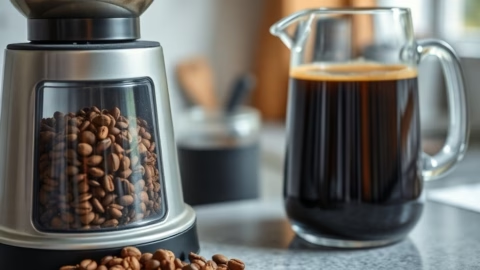
Cold brew requires a coarse grind — similar to French press or slightly coarser. The coarse grind slows extraction appropriately for the long steep time. Pre-ground coffee sold for drip or espresso is too fine for cold brew and will over-extract into bitterness within 12 hours.
Freshness matters less in cold brew than in hot brew methods, but coffee ground more than 2 weeks ago will produce a flatter result. Buy whole beans and grind immediately before brewing for best results.
See our reviewed cold brew coffee and concentrates, or our cold brew makers to find the right gear for your beans.