
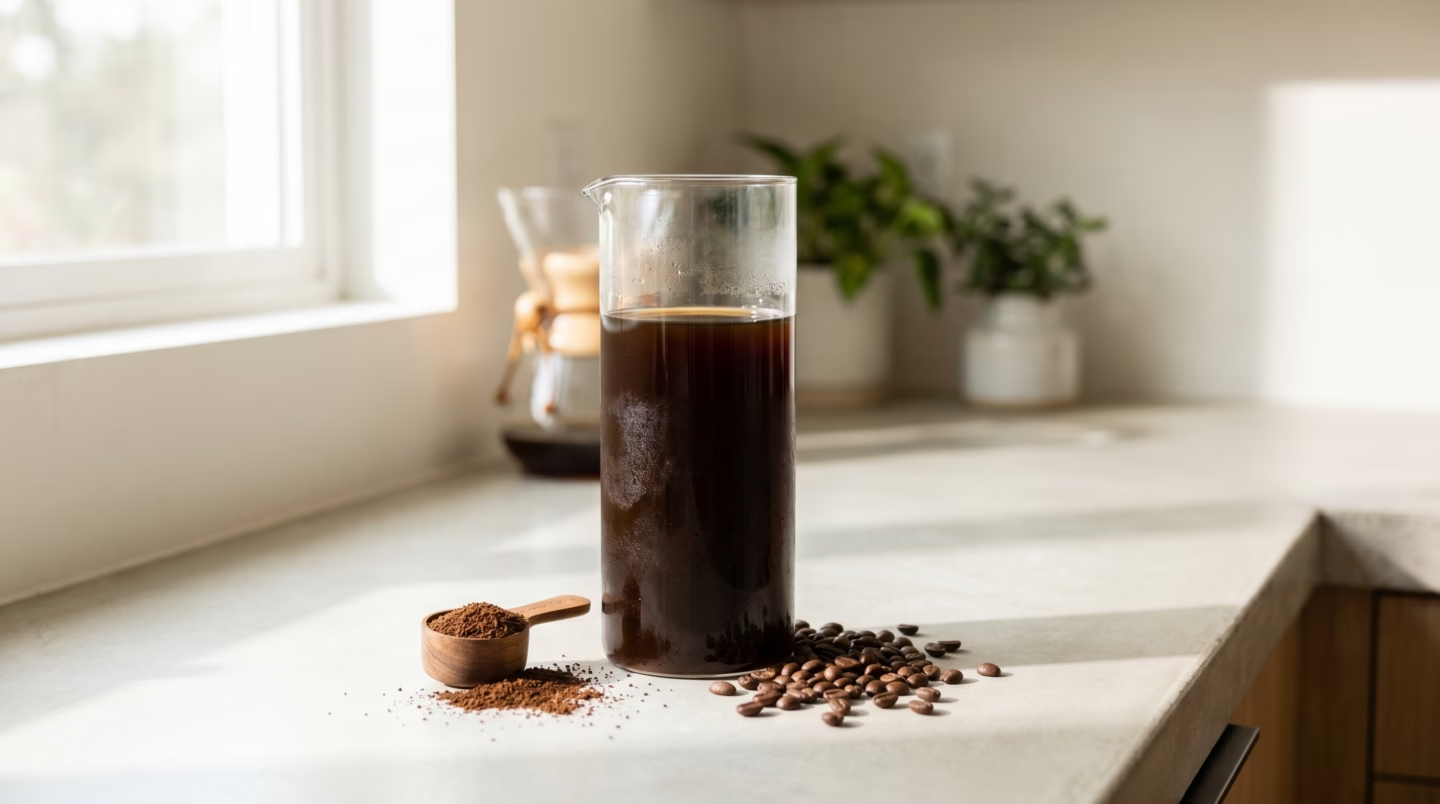
Finding the best cold brew maker shouldn’t feel like a chemistry exam, but after years of running a cafe and steeping coffee at home almost nightly, I can tell you the gear genuinely changes what lands in your glass. The right brewer gives you low-sediment, sweet, mellow coffee with almost no effort; the wrong one gives you grit, leaks, and a sink full of soggy grounds. I steeped, poured, and washed my way through three popular makers to find the ones worth your counter space. Below you’ll find my honest ranking, where each one shines, where it frustrates me, and how to pick the style that fits your kitchen and routine.
- Our top picks at a glance
- Takeya Deluxe: best overall
- OXO Good Grips: best for smoothness
- County Line Mason Jar: best budget
- How to choose the best cold brew maker
- How we test
- FAQ
- The verdict
Our top picks at a glance
Each of these makers earned its place for a different kind of drinker. If you want one jug that brews and stores without fuss, start at the top. If you chase the cleanest, smoothest cup, look to the OXO. And if you want glass and a low price, the mason jar holds up better than you’d expect.
| Pick | Best for | Notes |
|---|---|---|
| Takeya Patented Deluxe | Best overall | Airtight, leak-proof, brews and stores in one jug; fine mesh stainless filter keeps sediment low. |
| OXO Good Grips | Best for smoothness | Paper filter yields very clean concentrate; even saturation, but more parts to clean. |
| County Line Kitchen Mason Jar | Best budget | Glass with no plastic contact, inexpensive, easy to clean; lets through a little sediment. |
Takeya Patented Deluxe Cold Brew Maker: best overall
The Takeya is the one I reach for on a weeknight when I just want coffee waiting for me by morning. You load grounds into the stainless mesh filter, screw it onto the jug, fill with water, and tuck it into the fridge door, where its slim shape actually fits. Twelve to twenty-four hours later you lift out the filter and you’re done: brew and storage in a single vessel, no decanting, no second container. The airtight, leak-proof lid means you can shake it to saturate the grounds and lay it on its side without a puddle. The fine mesh keeps sediment impressively low for a maker without paper.
It’s made of BPA-free Tritan plastic rather than glass, which I’ll flag honestly for anyone who prefers no plastic contact with their coffee. The upside is that it shrugs off drops that would shatter a jar. My one real gripe is the filter: those fine mesh walls trap oily grounds and need careful rinsing, ideally a backwards blast under the tap, or you’ll get buildup over time. The body and lid are dishwasher safe, which softens the chore.
- Pros: Airtight and leak-proof; brews and stores in one jug; low-sediment stainless mesh filter; fits a fridge door; dishwasher safe.
- Cons: Tritan plastic, not glass; the fine filter needs careful, thorough rinsing.
See full details on our product page.
OXO Good Grips Cold Brew Coffee Maker: best for smoothness
If your standard for cold brew is glass-clear, sediment-free, almost tea-like smoothness, the OXO is the one to beat. Its standout feature is the Rainmaker lid, a perforated top that distributes water evenly over the grounds so every particle gets saturated rather than leaving dry clumps floating. Paired with the paper filter, the result is the cleanest concentrate in this group by a noticeable margin, the kind of cup that needs no straining and tastes round and free of grit even at the bottom of the glass.
It brews a concentrate you dilute to taste, which I like for flexibility: cut it with water, milk, or pour it over ice and adjust strength by the day. The tradeoffs are real, though. There are more parts to assemble and clean than the Takeya, and the gravity drip release at the end is slow, you flip a switch and wait while it filters down into the carafe. It rewards patience rather than impatience. If you brew in batches and value the cup above all, that wait pays off.
- Pros: Rainmaker lid gives even saturation; paper filter yields very clean concentrate; concentrate dilutes flexibly.
- Cons: More parts to clean; slow drip release at the end of the brew.
See full details on our product page.
County Line Kitchen Mason Jar Cold Brew Maker: best budget
Not everyone wants to spend much to find out whether cold brew belongs in their routine, and the County Line mason jar is the smart, low-cost way in. It’s a sturdy glass jar with a stainless mesh filter lid, so your coffee never touches plastic, which matters to a lot of drinkers and to me when I’m steeping for a long stretch. The wide mouth makes it genuinely easy to clean, you can get a hand and a brush right inside, and the glass wipes clean without holding old coffee oils the way fine mesh can.
Honesty time: it’s glass, so it can break if you knock it off the counter, and you lose the spill-proof confidence of a sealed jug. The mesh also lets through a little more sediment than the Takeya or the paper-filtered OXO, so a steadier hand when pouring, or a quick second strain, helps if you’re sensitive to grit. For the price, though, it punches well above its weight and looks handsome on a shelf.
- Pros: Glass means no plastic contact; inexpensive; wide mouth is easy to clean.
- Cons: Glass can break; filter lets through a little sediment.
See full details on our product page.
How to choose the best cold brew maker
Picking the best cold brew maker comes down to matching a few design choices to how you actually drink coffee. Here’s how I’d think it through before buying.
Immersion vs. drip
All three makers here are immersion brewers: grounds steep fully submerged in water, which is forgiving, consistent, and what most people mean by cold brew. Slow-drip tower systems trickle water over grounds for a cleaner, more delicate cup, but they’re fussy, pricey, and slow. For home use, immersion wins on simplicity nearly every time. If you’re new to this, start with immersion and don’t look back until you’re chasing nuance.
Filter type
This is the single biggest driver of how your cup tastes. Fine stainless mesh, like the Takeya’s, lets through more body and oils for a fuller flavor with low but not zero sediment. Paper filters, like the OXO’s, strip out nearly all grit and oil for a crystal-clean concentrate, at the cost of buying filters and a touch of body. Coarser mesh, like the mason jar’s, is easiest to clean but passes the most sediment. Choose by whether you prize cleanliness or richness.
Material: glass vs. plastic
Glass, as in the County Line jar, never imparts flavor and reassures anyone wary of plastic, but it can shatter. Quality plastic like Takeya’s BPA-free Tritan is durable and light and survives drops, though some drinkers simply prefer their coffee never touch it. Neither is wrong; it’s a tradeoff between durability and material preference. Be honest with yourself about how clumsy your kitchen gets at 6 a.m.
Capacity
Think in cups per brew cycle and in fridge real estate. A tall jug that brews a quart-plus is great for a household or a heavy daily drinker, but only if it fits where you’ll store it, which is why the Takeya’s fridge-door shape matters. If you drink a glass or two a day, a smaller jar means fresher coffee and less waste, since cold brew is best within a week or so.
Cleaning
The maker you actually clean is the maker you’ll keep using. Wide-mouth jars and dishwasher-safe parts lower the friction; fine mesh filters and multi-part systems raise it. Be realistic. If a fiddly filter will sit dirty in your sink, lean toward the simplest design you can live with, because stale oils are the fastest way to ruin good cold brew.
How we test
I brew with each maker the way a real person would, not in a lab vacuum. For a fair comparison I use the same coffee, a medium-coarse grind, the same coffee-to-water ratio, the same filtered water, and a 16-to-18-hour steep at refrigerator temperature. Then I taste each one black and again diluted, judging body, sweetness, bitterness, and how much grit settles at the bottom of the glass.
Beyond the cup, I live with each maker for at least a week. I note how it fits in the fridge, whether the lid actually seals when tipped, how annoying the filter is to rinse, and whether it survives normal kitchen handling. I weigh sediment and smoothness heavily, then cleaning effort and durability, because those are what decide whether a brewer stays in rotation or gets shoved to the back of a cabinet. I tell you what I don’t love, not just what I do. To understand the method behind all this, the Wikipedia entry on cold brew coffee is a solid, non-commercial primer.
FAQ
How long does cold brew last in the fridge?
Brewed cold brew keeps well for about one to two weeks refrigerated, though it’s brightest in the first week. Undiluted concentrate, like what the OXO makes, tends to last toward the longer end. Keep it sealed and cold, and trust your nose and taste before pouring an old batch.
What grind size should I use?
Go coarse, like raw sugar or a bit chunkier. A coarse grind extracts slowly and evenly over the long steep and, just as important, passes less sediment through your filter. Fine grounds over-extract into bitterness and slip through the mesh, leaving silt in your glass, especially with mesh-only makers like the mason jar.
What coffee-to-water ratio works best?
For a ready-to-drink immersion brew I like roughly 1 part coffee to 7 or 8 parts water by weight. For a concentrate to dilute later, tighten to about 1 to 4 or 1 to 5. Start there, taste, and adjust to your palate; ratios are a starting line, not a rule.
Can I make hot coffee from cold brew?
Yes. Brew a concentrate, then cut it with hot water to taste for a low-acid hot cup that’s gentle on the stomach. It won’t taste identical to fresh drip coffee, the aromatics differ, but it’s a genuinely pleasant, mellow way to enjoy your cold brew when the weather turns.
Why is my cold brew bitter or sour?
Bitterness usually means you steeped too long or ground too fine; sourness often means under-extraction from too short a steep or too coarse a grind. Dial steep time to 14 to 20 hours, keep the grind coarse, and adjust one variable at a time until the cup tastes round.
The verdict
If you want one recommendation, the Takeya Patented Deluxe is the best cold brew maker for most people: it’s the rare gadget that’s genuinely effortless, brewing and storing low-sediment coffee in a single leak-proof jug. Chase a flawlessly smooth cup and willing to clean a few more parts? The OXO Good Grips rewards you. Want glass on a budget? The County Line mason jar delivers. Browse the full lineup in our cold brew makers category, and once your gear is sorted, level up the cup itself with our guides to the best coffee beans for cold brew and the best cold brew concentrate. Brew a batch tonight; future you will be grateful.