
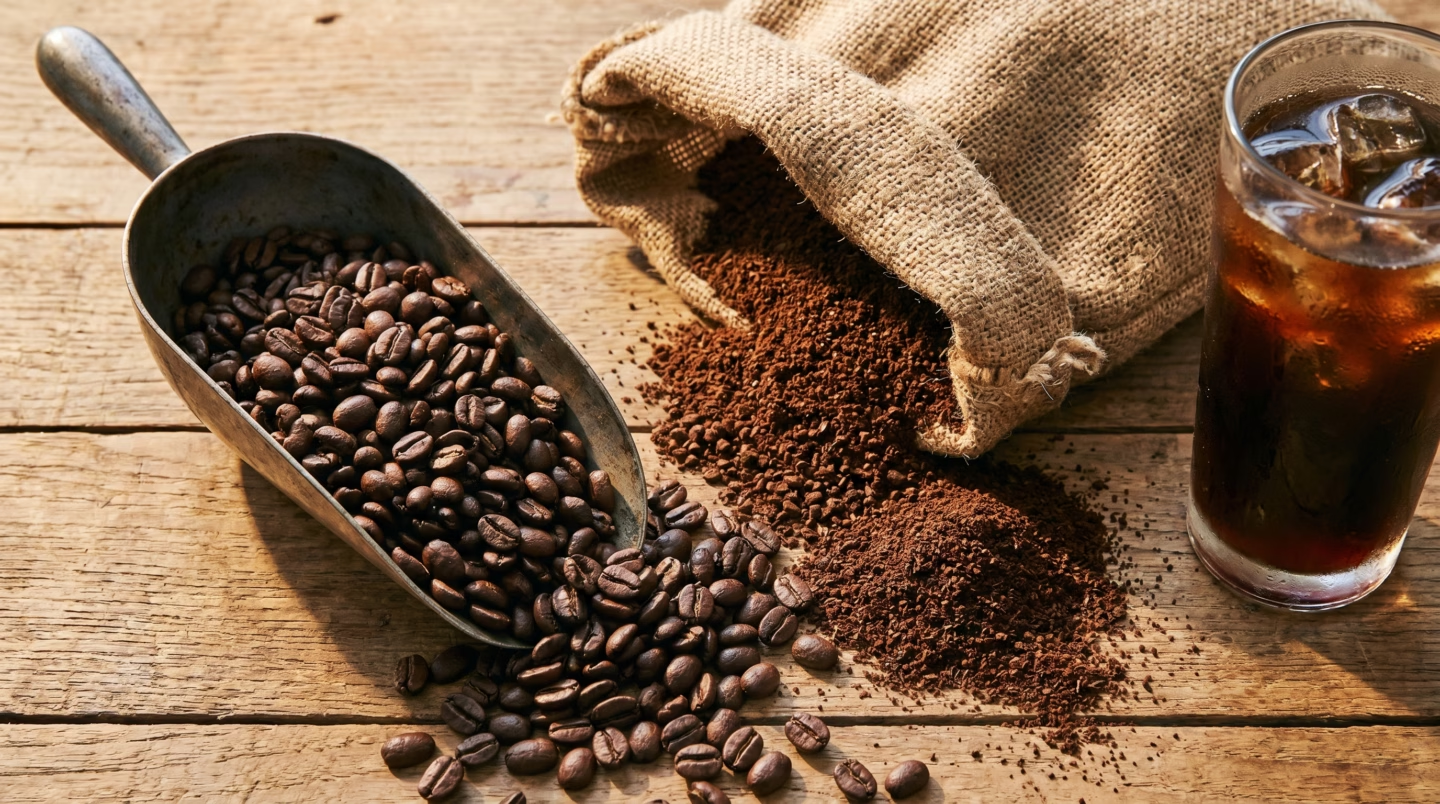
Choosing the best coffee beans for cold brew matters more than most people expect, because cold water pulls flavor from coffee very differently than hot water does. Over a 12-to-18-hour steep, the brew never gets the heat that brightens (and sometimes sharpens) a hot cup. What you taste instead is the bean itself: its body, its sweetness, and whether it leans sour or smooth. The beans that shine here tend to be low in acidity, rich with chocolate and nutty notes, and ground coarse so the concentrate finishes clean rather than muddy. At our cafe, cold brew is what we drink on our feet all summer, so we are picky about what goes in the steeper.
This guide walks through the three beans we reach for, how they differ, and how to pick the right one for your setup. We will be honest about the trade-offs too, because no single bag is perfect for every palate.
Our top picks at a glance
Three beans, three jobs. The table below sums up who each one is for before we dig into the details. Every pick here makes a smooth, low-acid concentrate; the differences come down to roast level, whether the beans arrive ground or whole, and whether organic certification matters to you.
| Pick | Best for | Notes |
|---|---|---|
| Stone Street Cold Brew Reserve | Best overall | Coarse pre-ground, dark and chocolatey, no grinder needed |
| Bizzy Organic Cold Brew | Best organic | USDA organic, coarse ground, balanced medium-dark |
| Volcanica Cold Brew Coffee | Best whole bean | Low-acid whole beans, grind fresh, sweet and smooth |
Stone Street Cold Brew Reserve (Coarse Ground)
If you want to fill a steeper, walk away, and pour something delicious 16 hours later, this is the bag we hand people first. Stone Street’s Reserve comes pre-ground at a proper coarse setting made for cold brew, so there is no grinder to buy and no guesswork about particle size. It is a dark, chocolatey blend that brews into a strong, low-acid concentrate with real backbone, the kind that holds up after you cut it with water or milk. It is genuinely our default for the cafe’s batch brewer.
The honest caveat: this is a dark roast through and through. If you gravitate toward bright, fruity light roasts, the deep cocoa-and-toasted-nut profile here may read as too heavy for you.
- Pros: Coarse grind dialed in for cold brew; bold low-acid concentrate; no grinder required; reliable and forgiving.
- Cons: Firmly dark roast, so light-roast fans should look elsewhere.
See full details on our Stone Street Cold Brew Reserve product page.
Bizzy Organic Cold Brew (Coarse Ground)
For drinkers who care about certification, Bizzy is the easy answer. It is USDA organic and arrives coarse ground, ready to drop straight into your steeper. What sets it apart from a typical cold brew bag is balance: it lands in medium-dark territory and tastes a touch brighter than most cold brew blends, so the concentrate keeps some liveliness alongside its smoothness. If Stone Street is the deep end of the pool, Bizzy is the comfortable middle.
The trade-off is price. Organic sourcing costs more, and you will pay a premium over generic supermarket grounds. For us, the cleaner sourcing and rounder cup justify it, but your budget may feel otherwise.
- Pros: USDA organic; coarse ground and ready to brew; balanced medium-dark that is brighter than typical; smooth concentrate.
- Cons: Pricier than supermarket grounds.
Read more on our Bizzy Organic Cold Brew product page.
Volcanica Cold Brew Coffee (Whole Bean)
This is the pick for people who own a burr grinder and want maximum freshness in the cup. Volcanica sells its cold brew blend as whole beans, a low-acid, chocolatey profile that you grind coarse to order right before steeping. That little bit of extra effort pays off: the concentrate comes out smooth and noticeably sweet, with a clarity that pre-ground bags can lose over weeks on a shelf. When we want the best possible cup, this is where we go.
Two caveats. You need your own burr grinder to get an even coarse grind, since a blade grinder will give you uneven particles and a muddier brew. It also sits at the higher end on price.
- Pros: Whole bean for peak freshness; low-acid and chocolatey; smooth, sweet concentrate when ground coarse.
- Cons: Requires your own burr grinder; on the pricier side.
Explore the details on our Volcanica Cold Brew Coffee product page.
How to choose the best coffee beans for cold brew
Picking the best coffee beans for cold brew comes down to a few variables that interact with each other. Here is how we think through each one.
Roast level
Cold brew tends to favor medium-dark and dark roasts. The longer, hotter roasting develops chocolate, caramel, and nutty flavors that translate beautifully through a cold steep, and it also softens acidity. Light roasts can work, but their delicate fruit and floral notes are harder to coax out in cold water and can come across thin or sour. If you are new to cold brew, start darker.
Origin and flavor notes
Look for words like chocolate, cocoa, nutty, caramel, and low-acid on the bag. Beans from Brazil, Colombia, and Sumatra often deliver that smooth, heavy-bodied character. Blends are common in cold brew precisely because roasters can tune them for a rounded, crowd-pleasing concentrate rather than a single bright origin note.
Grind size: go coarse
Grind size is the variable people get wrong most often. Cold brew wants a coarse grind, roughly the texture of raw sugar or coarse sea salt. Coarse grounds extract slowly and evenly over the long steep, which keeps the concentrate clean and easy to filter. Grind too fine and you get over-extraction, bitterness, sediment, and a clogged filter.
Whole bean vs pre-ground
Pre-ground coarse bags like Stone Street and Bizzy are the convenient route: no equipment, no setup, just steep. Whole beans like Volcanica reward you with fresher flavor but require a burr grinder set to coarse. A burr grinder matters here because blade grinders produce uneven particles that muddy the cup. Choose based on the gear you already own.
Organic and sourcing
Organic certification, like Bizzy’s USDA organic status, is worth seeking out if you care about how the coffee was grown. It usually carries a price premium, so weigh it against your budget. It does not by itself make a bean taste better for cold brew, but it can align your morning ritual with your values.
How we test
Everything here gets brewed the way you would brew it at home, not in a lab. We use a standard immersion steeper with a 1:8 coffee-to-water ratio by weight, filtered room-temperature water, and a 16-hour steep before filtering. Pre-ground bags go in as-is; whole beans are ground coarse on a burr grinder right before steeping.
We taste each concentrate three ways: straight, cut 1:1 with cold water, and cut with whole milk over ice. We are looking for smoothness, body, sweetness, and how well the bean shrugs off bitterness and sourness. Notes are taken blind where we can manage it, and every bean here earned its spot by being something we would actually serve and drink ourselves, repeatedly, across more than one batch.
FAQ
What roast is best for cold brew?
Medium-dark and dark roasts are the safest bet. They bring chocolate, caramel, and nutty notes that cold water extracts cleanly, and their lower acidity makes for a smoother concentrate. Light roasts are possible but trickier and can taste thin or sour.
What grind size should I use for cold brew?
Coarse, about the texture of raw sugar or coarse sea salt. Coarse grounds extract slowly over the long steep, keeping the brew clean and easy to filter. Fine grounds over-extract and turn bitter and silty.
Can I use any coffee for cold brew?
Technically yes, but the results vary a lot. Any coffee ground coarse will brew, yet low-acid, chocolatey beans made for slow extraction taste markedly smoother. A bright, acidic light roast can come out sour in cold water. Starting with a bean built for cold brew saves you a lot of trial and error.
Light roast vs dark roast for cold brew, which wins?
For most people, dark roast wins on cold brew. It delivers the rounded, low-acid, chocolatey cup that defines a great glass of cold brew. Light roast can produce a more delicate, fruit-forward concentrate that some enthusiasts love, but it is less forgiving and easier to get wrong.
Should I buy whole bean or pre-ground for cold brew?
If you own a burr grinder, whole beans like Volcanica give you the freshest cup. If you do not, a coarse pre-ground bag like Stone Street or Bizzy is genuinely the smarter, more convenient choice and still tastes excellent.
How long does cold brew concentrate last?
Stored in a sealed container in the fridge, a well-made concentrate generally keeps its quality for up to two weeks, though we think it tastes best within the first several days. Trust your nose and taste before serving.
The verdict
If you want one bag that just works, the Stone Street Cold Brew Reserve is our best overall: coarse, chocolatey, low-acid, and grinder-free. Choose Bizzy Organic if certification and a slightly brighter cup matter to you, or Volcanica whole bean if you grind fresh and want maximum flavor. Whatever you pick, a coarse grind and a long, patient steep are what turn good beans into great cold brew. Browse the full lineup in our cold brew beans category, and once you have your beans, dial in the rest of your setup with our guides to the best cold brew maker and the best cold brew concentrate.