Nailing your cold brew ratio is the single biggest lever you have over how your batch tastes, and most people get it wrong on the first try. I’ve watched plenty of folks dump a scoop of grounds into a jar of water, leave it overnight, and end up with something that tastes like wet cardboard. The fix almost always comes down to one thing: how much coffee you’re using relative to your water. Get that right and everything else, from grind size to steep time, becomes a smaller adjustment rather than a rescue mission.
The quick answer: your ideal cold brew ratio
If you want a number to start with right now, here it is. For a concentrate you’ll dilute later, use roughly 1:4 to 1:5 (one part coffee to four or five parts water). For a ready-to-drink batch you pour straight over ice, go lighter at about 1:7 to 1:8. Concentrate is the smarter default because it stores better, takes up less fridge space, and lets you dial in strength glass by glass.
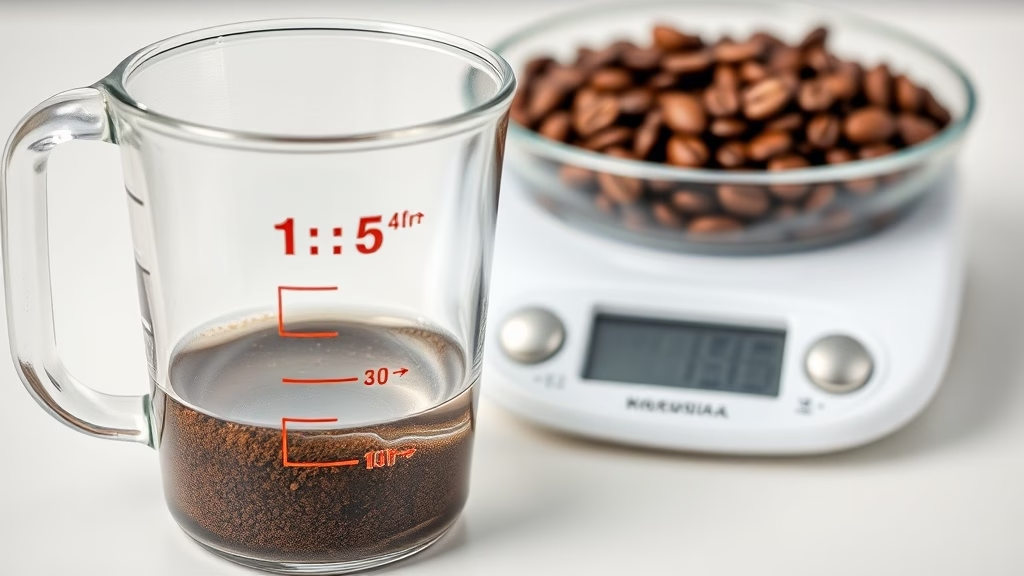
One rule matters more than the rest: measure by weight, not volume. Coffee beans vary wildly in density depending on roast and origin, so a “cup” of grounds is never the same twice. A kitchen scale and grams give you a ratio you can actually repeat. That repeatability is what turns a lucky batch into your house recipe.
Cold brew ratio chart
Here’s how the common ratios stack up. Use this as your map, then adjust to your own palate over a batch or two.
| Use case | Coffee : Water (by weight) | Result |
|---|---|---|
| Strong concentrate | 1:4 | Bold, syrupy; dilute 1:1 with water or milk |
| Standard concentrate | 1:5 | The reliable all-rounder; great for lattes and iced coffee |
| Light concentrate | 1:6 | Softer body; needs less dilution |
| Ready-to-drink | 1:7 to 1:8 | Pour straight over ice, no dilution needed |
How to measure: grams vs cups
Cups are convenient, but they lie. A volume scoop of light-roast beans weighs more than the same scoop of oily dark roast, and grinding changes everything again. If you only have measuring cups, a rough starting point is about 1 cup of grounds to 4 cups of water for a concentrate. It’ll get you in the neighborhood, but it won’t be consistent batch to batch.
The scale method is dead simple. Put your empty brewing vessel on a kitchen scale and zero it out. Add your coffee in grams, note the number, then multiply by your ratio for the water weight. Since one milliliter of water weighs one gram, you can pour water right onto the same scale. For a 1:5 concentrate with 100g of coffee, that’s 500g (500ml) of water. Done.
Scaling up for a batch
Once you trust your cold brew ratio, scaling is just multiplication. Decide how much concentrate you want, then work backward. Say your pitcher holds about 1 liter and you’re brewing at 1:5: that’s roughly 200g of coffee to 1000g of water. Want a half batch? Halve both numbers. The ratio holds no matter the size, which is the whole point of working by weight.
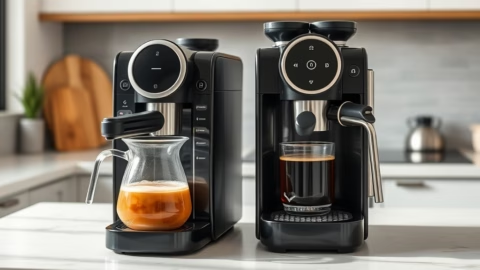
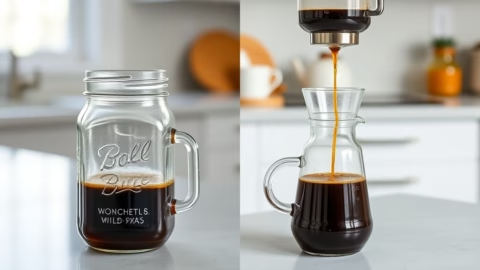
A few practical notes for bigger batches. Make sure all your grounds are fully saturated, give them a gentle stir after pouring, and don’t overpack the vessel, or water can’t circulate. A dedicated brewer like the Takeya Cold Brew Maker handles saturation and straining in one step, which removes most of the guesswork. If you’re still shopping, our guide to the best cold brew maker walks through sizes and styles for different households.
Adjusting your cold brew ratio to taste
Your ideal cold brew ratio is the one your mouth likes, so treat the numbers as a starting line. If your brew tastes weak or sour, you likely need more coffee (move from 1:6 toward 1:4) or a slightly longer steep. If it tastes harsh, bitter, or overwhelming, back the coffee off or dilute more aggressively when you serve.
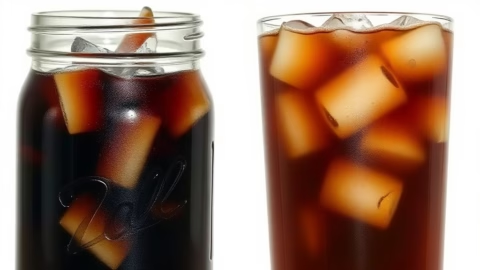
Dilution is your friend with concentrate. A 1:1 split of concentrate to cold water (or milk) is the classic move, but nothing’s stopping you from going 2:1 for a stronger glass or 1:2 for an easy sipper. Build the concentrate consistently, then vary the dilution by the glass rather than re-brewing. That’s the flexibility a true concentrate buys you, and it’s why I steer most people toward it over ready-to-drink.
Beans matter here too. A coarse grind and a coffee suited to cold extraction will forgive a lot. If your results feel flat no matter the ratio, the issue may be the coffee itself, so it’s worth reading up on the best coffee beans for cold brew before you keep tweaking numbers.
Common cold brew ratio mistakes
The mistakes I see most often are small but costly. The biggest is measuring by volume and wondering why every batch tastes different. Right behind it: confusing concentrate ratios with ready-to-drink ratios, then drinking a 1:4 concentrate straight and deciding cold brew is “too strong.”
Other frequent culprits include using a grind that’s too fine (which over-extracts and clogs your filter), steeping far too long because “more is better” (12 to 18 hours is plenty for most ratios), and skimping on coffee to save money, which just gives you expensive brown water. If you’re unsure whether cold brew is even the style you want, our breakdown of cold brew vs iced coffee clears up the difference. Cold brew is, at its core, simply coffee steeped in cold or room-temperature water over many hours, as Wikipedia’s overview of cold brew coffee lays out.
Cold brew ratio FAQ
What is the best cold brew ratio for beginners?
Start at 1:5 by weight for a concentrate. It’s forgiving, stores well, and dilutes cleanly to taste. Once you’ve made a couple of batches, nudge it stronger or weaker to find your sweet spot.
How much water do I add to cold brew concentrate?
For a 1:4 or 1:5 concentrate, start with a 1:1 split of concentrate to cold water or milk over ice. Adjust from there. Some people prefer 2 parts concentrate to 1 part water for a bolder cup.
Can I use the same ratio for hot coffee?
No. Hot brewing extracts much faster, so it uses far less coffee per unit of water. Cold brew’s long, cold steep is why it needs a heavier ratio to pull enough flavor from the grounds.
Why is measuring by weight better than cups?
Bean density changes with roast, origin, and grind, so a cup of grounds is never a fixed amount. Weighing in grams gives you a ratio you can repeat exactly, batch after batch.
Final pour
Dial in your cold brew ratio once and the rest of your routine gets easier for good. Start at 1:5 by weight for a concentrate, measure with a scale, and adjust strength through dilution rather than constant re-brewing. Keep a quick note of what you used and how it tasted, and within a few batches you’ll have a house recipe that turns out smooth, consistent cold brew every single time. That small bit of precision is the difference between hoping for good coffee and reliably making it.