How long does cold brew last is the question I get most often behind the bar, usually from someone holding a mason jar they brewed five days ago and sniffing it warily. The honest answer: it depends on what you brewed and how you stored it. Homemade ready-to-drink cold brew is good for about a week, undiluted concentrate stretches to roughly two weeks, and store-bought bottles follow their printed date. Below I’ll give you the quick numbers, a fridge-life table, my five storage rules, and the unmistakable signs that a batch has turned.
The quick answer
If you want a number and nothing else, here it is. Homemade ready-to-drink cold brew (already diluted, ready to pour over ice) tastes best within about a week in the fridge. Undiluted concentrate lasts longer, roughly up to two weeks, because the higher coffee-to-water density slows flavor loss. Store-bought cold brew follows its own printed best-by or use-by date once opened, treat that date as the ceiling, not a suggestion.
One detail trips people up more than any other: leaving the grounds in. If you brew and then let the coffee sit on its grounds in the fridge, it keeps extracting and degrades faster, turning bitter and muddy within a couple of days. Strain promptly, the moment your steep time is up, then store the clean liquid. That single habit does more for shelf life than any fancy container. If you are still dialing in your steep, our cold brew ratio guide walks through grounds-to-water by batch size.
Cold brew fridge life at a glance
| Type | Fridge life | Notes |
|---|---|---|
| Homemade ready-to-drink | ~7 days | Best flavor in the first 3–4 days; strain grounds immediately. |
| Homemade concentrate (undiluted) | ~14 days | Dilute per serving; density slows flavor loss. |
| Store-bought concentrate | Follow printed date | Refrigerate after opening; honor the use-by date. |
| Store-bought ready-to-drink | Follow printed date | Shelf-stable until opened, then treat like homemade. |
| Cold brew with grounds left in | 1–2 days | Over-extracts and sours fast, strain to fix. |
Numbers are practical guidelines for flavor and freshness, not a food-safety guarantee, your fridge temperature and cleanliness matter. When in doubt, follow the signs further down this page.
5 storage rules that actually extend shelf life
These are the habits that keep a batch tasting like day one for as long as possible. None of them are fussy, and together they are the difference between a week of good coffee and a jar you pour down the sink.
1. Use an airtight container
Oxygen is the enemy of brewed coffee. Air exposure flattens aroma and dulls the bright, chocolatey notes you steeped so patiently for. Store cold brew in a sealed glass jar or a bottle with a tight lid, glass over plastic, since plastic can hold onto coffee oils and odors over time. Fill the container fairly full so there is less air sitting on top of the liquid. A swing-top growler or a wide-mouth mason jar both work beautifully.
2. Keep it cold, back of the fridge, not the door
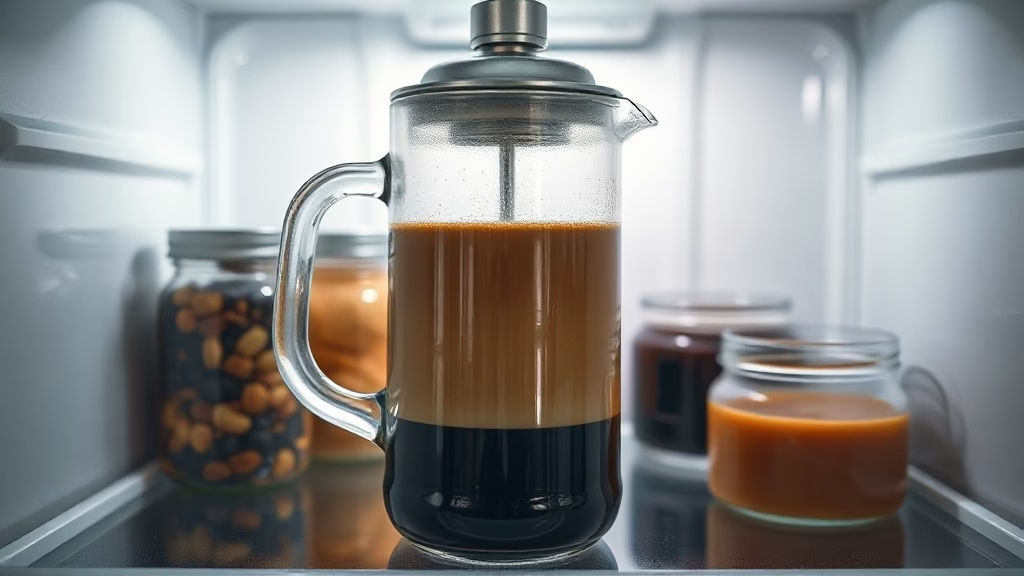
Cold brew should live in the coldest, most stable part of your refrigerator, which is the back of a middle or lower shelf. The door is the warmest spot and swings through temperature changes every time you open it, which shortens shelf life. Steady cold slows the chemistry that ages your coffee. Never leave cold brew at room temperature for long stretches, return it to the fridge promptly after pouring a glass.
3. Strain out the grounds promptly
I said it above and I’ll say it again because it matters most. The second your steep time is done, separate the liquid from the grounds, a fine-mesh sieve lined with a paper filter, a nut-milk bag, or your maker’s built-in filter all work. Coffee left in contact with grounds keeps extracting, growing harsh and over-bitter, and it spoils noticeably faster. A clean, grounds-free liquid is the foundation of everything else here. A good brewer makes this painless, see our best cold brew maker picks.
4. Store it undiluted when you can
Concentrate keeps longer than ready-to-drink coffee, so if you brew strong and dilute per glass, you buy yourself extra days. The denser liquid is more stable, and you control the strength of every cup. Add water, milk, or ice only when you pour. This is exactly why concentrate is my default recommendation, our best cold brew concentrate guide explains the trade-offs, and a grab-and-go option like the Wandering Bear concentrate skips brewing entirely.
5. Label the date
You will not remember when you brewed it. I promise. A strip of masking tape and a marker on the jar, with the brew date, turns the guessing game into a glance. Once you label a few batches you’ll start to learn your own palate’s timeline, some folks happily drink concentrate at day twelve, others want it gone by day eight. Writing it down makes that call easy and keeps you from sniff-testing every morning.
Signs your cold brew has gone off
Trust your senses, they are reliable here. A batch past its prime usually announces itself. Watch for these and, if you see them, pour it out, no batch of coffee is worth second-guessing.
Sour or fermented smell: fresh cold brew smells sweet and rich; a sharp, vinegary, or yeasty note means it has turned. Flat, hollow taste: if the brightness is gone and it tastes like cardboard or stale water, it is oxidized and past enjoyable, technically drinkable but not worth it. Mold, film, or fizz: any visible mold, an oily slick beyond normal coffee oils, cloudiness, or unexpected carbonation means discard it immediately. These are the clearest stop signs.
Does cold brew go bad, and is it safe?
Yes, cold brew goes bad eventually, like any brewed coffee it is perishable once it is made. Refrigeration slows spoilage but does not stop it, which is why the timelines above matter. The good news is cold brew is fairly forgiving, its lower acidity and lack of dairy (when black) mean it degrades in flavor before it becomes a real safety concern. The risk rises sharply once you add milk or sweet flavorings, those cut shelf life to a few days and should always stay refrigerated. For background on the brewing method itself, see Wikipedia’s overview of cold brew coffee. When in doubt, lean on the spoilage signs above rather than pushing a date.
FAQ
Can you freeze cold brew?
Yes. Freezing is the best way to extend life well beyond two weeks. Pour concentrate into an ice-cube tray and freeze, then drop the cubes into milk or water for an instant iced coffee that won’t water down as it melts. Frozen concentrate keeps its flavor for a couple of months.
How long does store-bought cold brew last after opening?
Once opened, treat a store-bought bottle like homemade, finish a ready-to-drink bottle within about a week and a concentrate within roughly two, but never past the printed use-by date. Always refrigerate after opening, even bottles that were shelf-stable on the store shelf.
Does cold brew last longer than hot-brewed coffee?
Yes, by a wide margin. Hot-brewed coffee goes stale within hours and tastes flat once it cools. Cold brew’s slow, cold extraction produces a more stable, lower-acid liquid that holds up for days in the fridge, which is a big part of its appeal.
Why did my cold brew get bitter after a few days?
Almost always because the grounds were left in. Coffee in continued contact with grounds keeps extracting and turns harsh. Strain immediately after brewing and store only the clean liquid, and the bitterness problem disappears.
The bottom line
So, how long does cold brew last? Plan on about a week for homemade ready-to-drink, up to two weeks for undiluted concentrate, and the printed date for anything store-bought. Strain your grounds the moment brewing finishes, store the liquid airtight in the cold back of the fridge, keep it undiluted when you can, and slap a date on the jar. Do those five things and you’ll get every good day your batch has to give, and you’ll know exactly when to let one go. Trust your nose, label your jars, and enjoy the brew.